More on Lulu and the Information Revolution
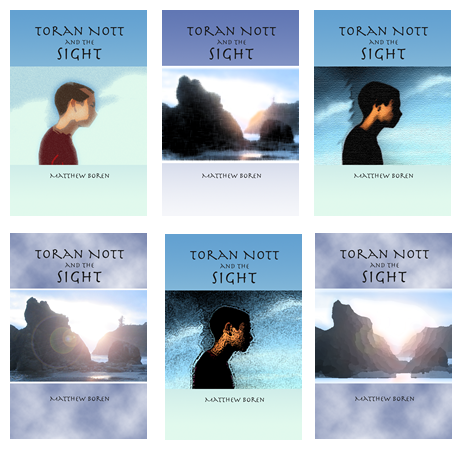
My son was too excited to wait any longer, so we uploaded the new cover for his book on lulu.com this morning. After a few changes to meet upload requirements, here’s what I learned—not just about self-publishing, but about what it means for him, and maybe others caught up in the information revolution.
Lesson 1: Read the Instructions. First. It did take some tweaking to get the images the right resolution and size. I think that when I get a printed copy I might have some pixelation on the cover art because I didn’t start out at a high enough resolution. So… read the requirements for cover art before you start. (My son is still giddy, pixelation or no.)
Lesson 2: Keep your source files and experiments. Luckily this one didn’t bite me. I had all me psd files from the experimentation I had done. So when my son asked for changes (adding the lens effect from one of the comps to a different comp), I didn’t have to go back and figure it out.
Lesson 3: Customers don’t always say what they want. I’ve talked about this at length before. My son said he didn’t want the profile to be recognizably… him. But the one he picked has a pretty distinctive “Matthew” outline, though the face is dark. I think there’s a corner of him that very much wants people he knows to recognize his silhouette… but he doesn’t want to tell me that. Or maybe he doesn’t even realize it himself. I run into this kind of discrepancy all the time at work.
Lesson 4: Lulu is really cool. OK, so it’s just an opinion, not a lesson. But as I went through the wizards, I couldn’t help getting excited about what this opportunity represents. From the days from before Gutenberg, when only the very wealthy could ever afford to purchase books, let alone publish them; through the printing revolution where the masses could now afford to buy books (but not publish themselves); to the information revolution, where now you can not only publish online via blogs and websites, but also publish and distribute your own professionally printed material at relatively inexpensive prices. Societal implications aside, it has done wonders for my son’s self-confidence and view of his future. His blogging has a similar effect; he feels he is a contributor to the conversation of life, not just a bystander with nothing to say.
Here is what my son’s Lulu site looks like, with the latest tweaks my son requested to the cover:

How cool is that?